What is Generative AI and How Are Apps Built with It?
What Is Generative AI?
Generative AI refers to a class of AI models that can create new content like text, images, code, music, and more rather than just analyse existing data. Unlike traditional AI, which is mostly focused on:
- Detecting spam
- Predicting loan defaults
- Recommending products
Generative AI can:
- Write full emails or blog posts
- Create customer service responses
- Generate business ideas
- Design UI mockups
How Does It Work?
Generative AI models are often based on large language models (LLMs), systems trained on massive datasets of text and code. They learn patterns in language and can generate coherent, human-like output based on prompts.
These models don’t “think.” They predict the most likely next word or phrase based on your input.
Key components:
- LLMs like GPT-4, Claude, Gemini
- Prompts — the instructions you give the model
- APIs — the bridge between your app and the AI model
- Tooling — apps and interfaces built around those APIs
What Is a Generative AI App?
A Generative AI app is an application that integrates an LLM (or another generative model) to do something creative or responsive.
Common examples:
- A chatbot that answers user questions
- A tool that rewrites or summarizes text
- A code assistant that autocompletes your logic
- A resume enhancer that gives tailored suggestions
These apps don’t “train” new models, they use existing models via API and apply:
- Smart prompting
- Data filtering
- Custom logic
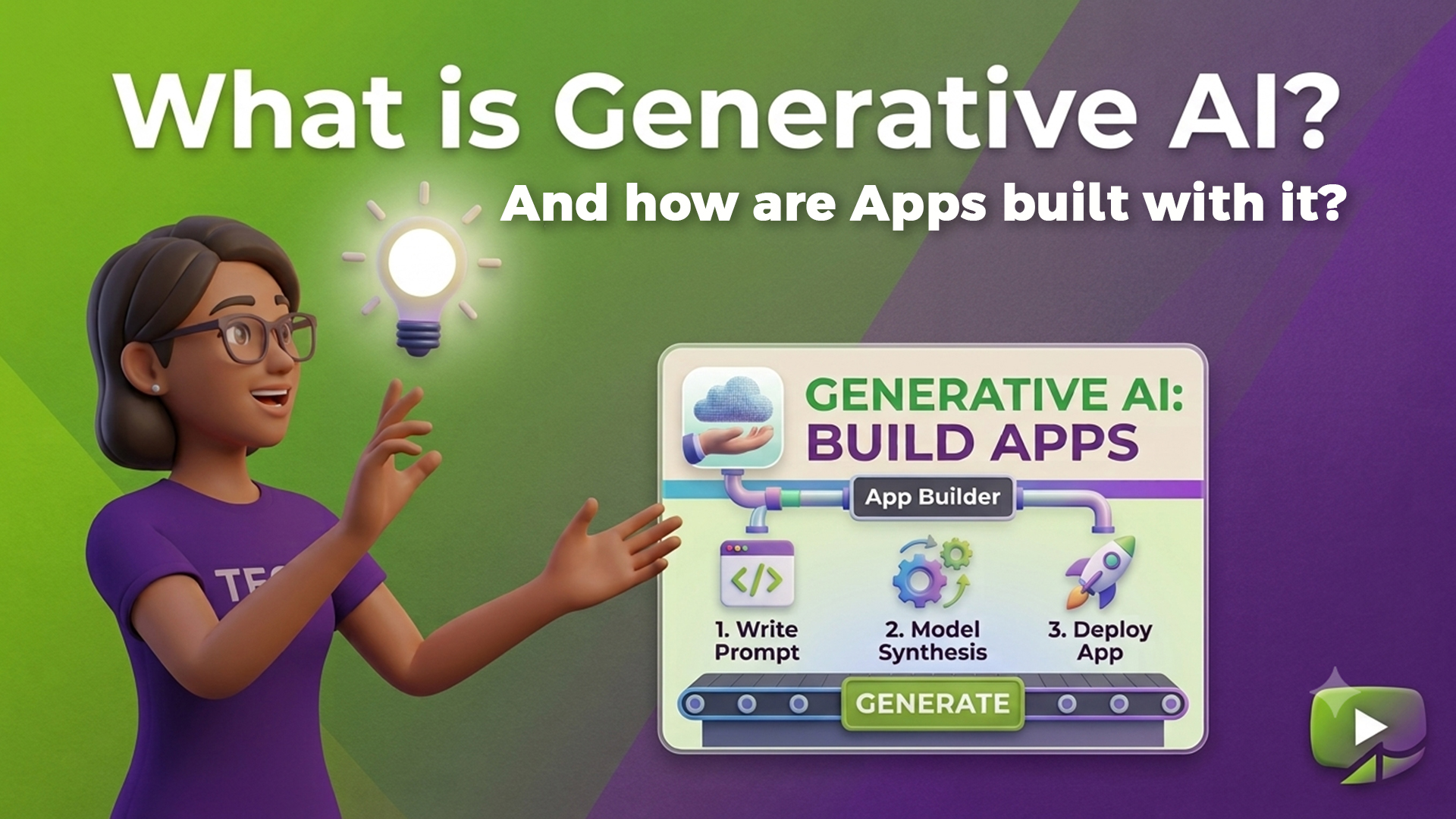
How Are These Apps Built?
Here’s a simplified overview of the tech stack:
- Prompt Design
- Writing clear instructions to the model
- Including examples, roles, constraints
- Calling the API
- Using Python or JavaScript
- Tools like OpenAI, Gemini, Claude via REST API
- Building the Interface
- Using Streamlit, Flask, or React for a front-end
- Form inputs → prompt → API → output display
- Adding Logic (Optional)
- Store past interactions (memory)
- Add file or document search (RAG)
- Handle different flows (multi-step)
Real-World Example
Imagine an app called JobGenie:
- You paste your resume.
- You describe the job you’re applying for.
- It returns a personalized cover letter and suggestions for improvement.
Behind the scenes:
- The app prompts Gemini with your resume and the job description
- Gemini generates a draft response
- The app displays that with edit and download options
This is how non-AI developers can still build powerful tools.
Summary – Key Takeaways
- Generative AI apps use pre-trained models via APIs (like Gemini or GPT).
- Prompt design is as important as coding.
- You don’t need to train models — just connect and apply.
- These apps can be used to build productivity tools, chatbots, and more.
Citations :
Critical thinking challenge question :
Write a prompt for an AI model that does one of the following:
- Helps you write a birthday message
- Summarizes a news article
- Asks follow-up questions based on a user’s input
Then, test it in ChatGPT or Gemini and paste the results in your course notebook.
Watch this video for further learning:
What is Generative AI and How Are Apps Built with It?
Are you ready for the quiz?
Hashtags :
- #GPSforLifeAndCareer
- #ConsciousIntelligence
- #Kidswiki
- #MindInTheMaking
- #RelevanceInEducation
- #MeaningfulLearning
- #RealWorldSkills
- #SafeContent
- #360DegreeDevelopment
- #Skillioma
- #BeyondCurriculum
- #SkillsBeyondSchool